How Can a Complete Beginner Invest in Crypto Without Blowing Up an Account?
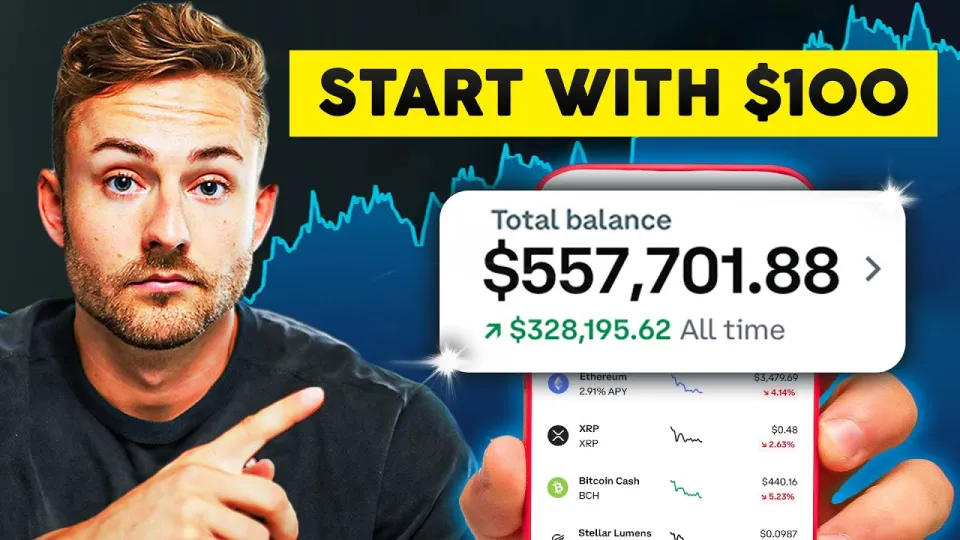
Video: How To Invest in Crypto as A COMPLETE Beginner [2025 GUIDE]
Need articles like this for your video? They help promote it on YouTube and Google — order them in the Telegram bot @sat_sit_bot. It writes articles around your video, embeds the video and publishes them on popular niche websites (no ads). Try it free: 50 articles on us.
· based on the channel Craig Percoco
Crypto investing for a complete beginner means buying a small number of well-understood assets with money you can afford to lose, using a regulated exchange, a written position size, and a plan for taking profit before you ever click buy. The goal of the first year is not to get rich but to survive long enough to learn how the market actually behaves. Craig Percoco's beginner guide is built around that same idea, and you can start with his free trading training here: free trading education and resources.
What crypto actually is and why beginners are drawn to it
Crypto is a market of digital assets that settle on blockchains, and it is genuinely an emerging asset class: small relative to equities, open 24/7, and capable of moving 10% in a day. Bitcoin is the largest and oldest asset, Ethereum is the biggest smart-contract platform, and thousands of altcoins compete for attention below them. The upside argument is simple — early exposure to a growing market — and the downside is equally simple: most altcoins lose most of their value, and leverage can erase an account in hours.
That is why the first decision is not which coin to buy but how much money to allocate. A beginner should treat crypto as a satellite position, not a savings account. If losing the entire amount would change your rent payment, your emergency fund, or your sleep, the position is too big.
The fundamentals to check before buying any coin
Fundamentals answer one question: does this asset have a reason to exist beyond the price chart? Start with the team and its track record, then read the tokenomics — total supply, circulating supply, inflation schedule, and vesting unlocks that can dump new coins on the market. A token with a large unlock in three months is a very different risk from one with a fixed supply.
Then look at usage and liquidity. Real usage means active addresses, fees paid, and applications built on top. Liquidity means how much volume sits on exchanges and how wide the spread is; thin liquidity turns a small sell order into a double-digit price drop. A practical checklist:
- Who is building it, and have they shipped anything before?
- What share of supply is held by insiders, and when do their tokens unlock?
- Does anyone use the network, or is the volume mostly speculation?
- Is the token listed on at least two reputable exchanges with deep order books?
- What would have to be true for this asset to be worth 10x more — and is that plausible?
How technicals help with timing rather than prediction
Technical analysis does not tell you the future; it tells you where other traders have placed their orders. For a beginner, three tools cover most of what matters: support and resistance levels, trend structure (higher highs and higher lows versus the opposite), and volume. A breakout on weak volume is usually a trap, which is exactly the pattern that burns new traders who buy every green candle.
Timeframes matter too. A daily chart shows the trend, a four-hour chart shows the swing, and a one-hour chart is mostly noise for someone holding for months. Charting platforms such as TradingView are the standard workspace for this, and the guide's resource list points to TradingView charting alongside other tools.
Risk management rules that keep beginners in the game
The most common reason new crypto investors lose money is not a bad coin pick — it is position sizing. A useful baseline: risk no more than 1–2% of your total portfolio on a single trade, and size the position from the stop-loss distance rather than from how confident you feel. If you buy at 100 with a stop at 90, a 10% stop means a 1% portfolio risk allows a position equal to 10% of the portfolio.
Beyond sizing, three habits separate survivors from statistics. First, write the exit before the entry: where you take profit, where you admit you were wrong. Second, avoid leverage until you have a documented track record of at least a few dozen trades. Third, keep a journal of every trade with the reason, the result, and the emotion involved — patterns in that journal are worth more than any indicator. Common self-diagnosed weaknesses among traders are a missing system, impatience, no backtesting, no journaling, and poor psychology, and all five are fixable with process rather than talent.
How to actually buy, sell, and store crypto
The mechanics are simpler than the theory. Open an account on a regulated exchange such as Coinbase for straightforward purchases or Bybit for a wider set of pairs, complete identity verification, and fund it with a bank transfer — card purchases usually carry higher fees. Then place a market order for an immediate fill or a limit order to name your price; limit orders are the better habit because they force you to decide the level in advance.
After the purchase, decide where the asset lives. Leaving small amounts on an exchange is normal for active trading, but long-term holdings belong in a hardware wallet with the seed phrase written on paper and stored offline. Never store a seed phrase in a screenshot, a cloud note, or a chat message. Finally, plan withdrawals: network fees, minimum withdrawal amounts, and the correct network selection are the three things that most often turn a simple transfer into a loss.
Typical beginner doubts and how to handle them
Skepticism is healthy and should be answered with structure, not hype. A beginner who does not fully understand the technology can still invest responsibly by limiting exposure, choosing the two largest assets first, and expanding knowledge before expanding the portfolio. Losses in the first months are almost universal; what matters is whether they came from a planned, small risk or from an oversized bet made in frustration.
Watch out for the noise around the market as well. Unsolicited messages promising mentorship, guaranteed returns, or a private group that turns a small account into six figures are the standard shape of a scam, and they appear in comment sections under every crypto video. No legitimate educator needs your exchange password or a transfer of funds to "manage" your account.
All links from the guide
- Free trading education
- Crypto trading course and private team
- Discord community access
- All resources
- TradingView charting
The bottom line for a first crypto position
A beginner invests in crypto successfully by starting small, understanding what they own, sizing every position so a loss is survivable, and writing the exit before the entry. Fundamentals decide what to buy, technicals decide when, and risk management decides whether you are still investing a year from now. Craig Percoco's video breakdown walks through this progression from crypto basics to buying, selling, and staying organized, and the free training linked at the start is the natural next step: start learning trading for free.
Key takeaways
- Crypto is an emerging market with high upside and high volatility; only risk capital you can afford to lose belongs in it.
- Fundamentals to check before buying: the team, tokenomics (supply, emissions, unlocks), real usage, and liquidity.
- Technical analysis is used for timing entries and exits, not for predicting the future; price structure and volume matter most.
- Most beginners fail on risk management, not on picking coins: position size and stop placement decide survival.
- Buying is simple on exchanges like Coinbase or Bybit, but withdrawals, fees, and self-custody need to be planned in advance.
Questions & answers
How much money should a complete beginner put into crypto?
Only money you could lose entirely without affecting your rent, emergency fund, or daily life. A common approach is a small satellite allocation funded gradually, with each individual trade risking 1–2% of the total portfolio. Starting small lets you learn the mechanics before the amounts matter.
Do I need technical analysis to invest in crypto?
Not to hold a long-term position, but it helps with entries and exits. Support and resistance, trend structure, and volume on higher timeframes are enough for most beginners. Technicals are a timing tool, not a prediction machine, and they never replace position sizing.
Is it safer to keep crypto on an exchange or in my own wallet?
Small balances used for active trading are usually fine on a reputable exchange. Long-term holdings are safer in a hardware wallet where you control the seed phrase, written on paper and stored offline. Never store a seed phrase digitally or share it with anyone.
Why do so many beginners lose money in their first months?
Mostly because of oversized positions, leverage, and buying breakouts without a plan rather than because of bad coin selection. A written system, backtesting, journaling, and patience address the majority of early losses. Treat the first year as tuition, not as a payday.
Source: How To Invest in Crypto as A COMPLETE Beginner [2025 GUIDE] · Markdown version